Configuring the tachograph functionality for a device
Who can do it: Service provider
Where: Wialon Platform Studio
In Wialon Platform Studio, the service provider configures the tachograph settings of a device in the Tracker and connection window:
- turn on the Tachograph option to download tachograph files from the device
- link the device to a company
- set up the Automatic file request feature
These settings apply to tachograph files only. Live tachograph data comes directly from the tracker, so you see it on the Live tab, in the driver details, and in the Wialon Driver mobile app without configuring anything here. For details, see Configuration steps.
You can configure these features only for the devices that support tachograph functionality. See their list on the Tachograph control page.
flespi gateway devices don’t need these settings. For details, see Receiving files from flespi gateway devices.
Enabling the Tachograph option
Turn on the Tachograph option to work with the tachograph files of the device.
-
In Wialon Platform Studio, open the Devices tab.
-
Select the device which you want to use as a tachograph. To quickly find the required device, use the dynamic search.
-
On the Profile tab of the device details find the Tracker and connection card. Сlick the icon
 to edit the card fields.
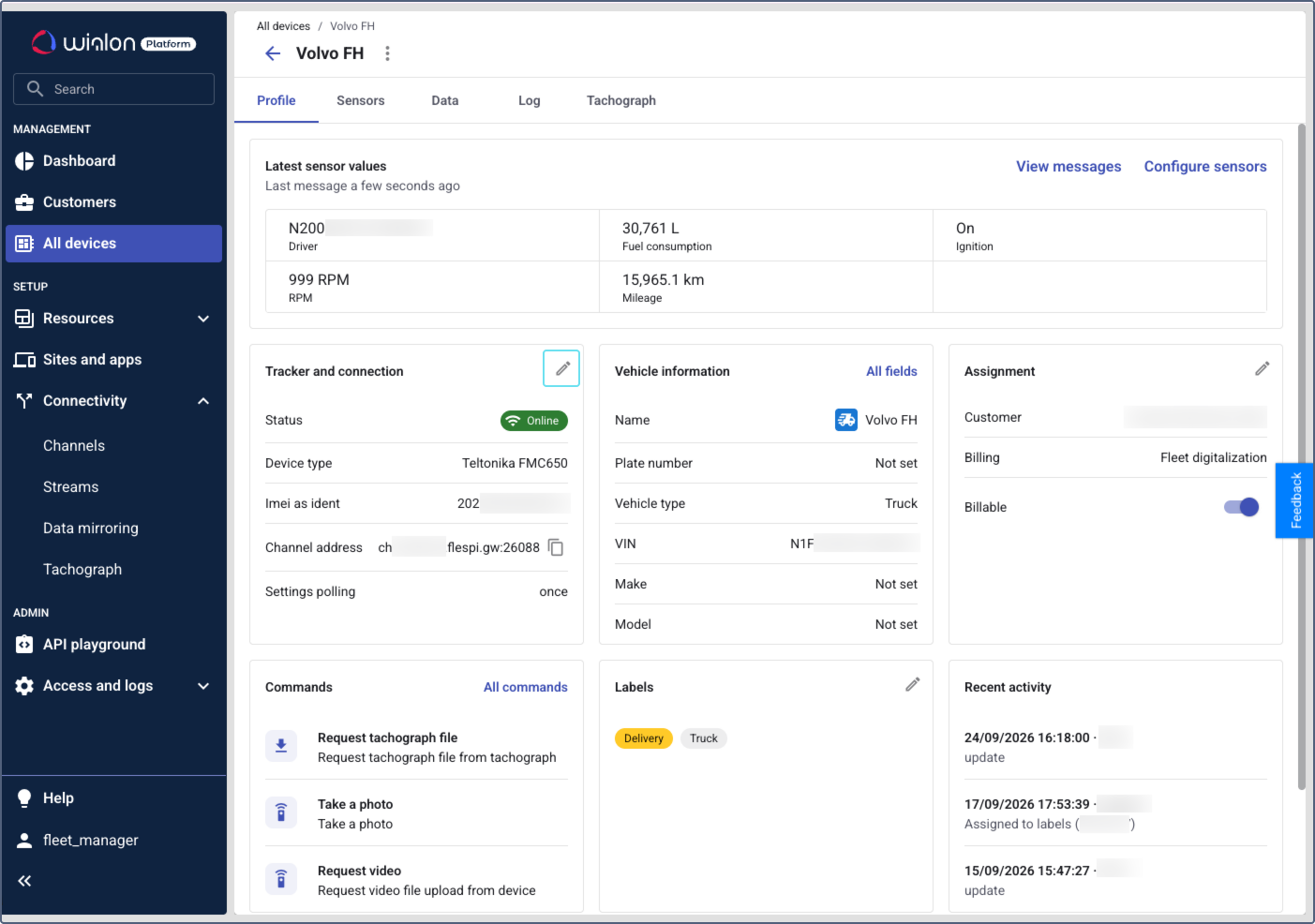
-
Turn on the Tachograph toggle.

After that, the following becomes available for this device:
| What | Where |
|---|---|
| The Tachograph tab with the received files and the sent commands | Device details in Wialon Platform Studio |
| Manual file requests | The Tacho devices tab of the Tachograph control page and the Tachograph tab of the device |
| The Automatic file request settings | Tracker and connection window of the device |
Turning the option on doesn’t affect live tachograph data: it’s shown for any device that sends tachograph telemetry, and it stays available when the option is off.
Configuring automatic file request
If you want files to be requested from a device automatically every specified time, configure the Automatic file request feature for this device. To do this, follow the steps below.
-
Complete the previous instructions to enable the Tachograph option for the device, if you haven’t done it yet.

-
Turn on the Automatic file request toggle.
-
In the Request interval field, specify the time period (in seconds) after which the system must request tachograph files from this device. The default interval is a week, that is, 604800 seconds.
-
In the Slot types field, select at least one slot type from which files should be requested. See Slot types.
-
Click Save.
The automatic file request is now configured.
Files are requested automatically when all the following conditions are met:
- The request interval time has already passed since the last successful automatic request for this slot.
- The device is online and available for retrieving a tachograph file.
- The Tacho bridge application is running and available for authentication;
- At least 5 minutes have passed since the last unsuccessful automatic file request.
Slot types
A digital tachograph stores the data in two places: on the card of each driver and in its own memory. The Slot types field defines which of them the system requests from this device.
| Slot type | What you get | Where you can use it |
|---|---|---|
| Driver slot 1 | The file of the driver card inserted in the first slot of the tachograph. | Driver activity events and Tachograph infringements reports, driver activity chronography, and the Tachograph tab of the driver. |
| Driver slot 2 | The file of the driver card inserted in the second slot, which is used by the second driver of the crew. | The same as for the first slot. |
| Tachograph memory data | The file of the vehicle unit, that is, the data stored in the memory of the tachograph itself. In the reports, it’s called the vehicle unit file. | Vehicle unit events report. |
You must select at least one slot type. To get the full picture of the fleet, select all three: the driver cards and the memory of the tachograph contain different data, and the regulations require you to download the driver cards at least every 28 days and the vehicle units at least every 90 days.
This field applies only to the automatic request. When you request files manually, you select the slot types each time in the request window.
Linking the device to a company
The company card is used to authenticate with the tachograph when a file is downloaded from it. Without the card of the company that owns the vehicle, the tachograph doesn’t give the data away, so link each tachograph device to a company.
-
Complete the instructions on enabling the Tachograph option for the device, if you haven’t done it yet.

-
In the Company card number field, select the company to which you want to link the device. The list shows the companies added to the Tachograph control page.
-
Click Save.
To link multiple devices to a company, see Linking devices to the companies.
Connecting a tachograph card
Who can do it: Service provider, Customer
Where: Wialon Platform FleetSpace
To integrate tachograph data with a driver’s profile, you need to assign their unique tachograph card code. This code is used for driver identification in the device and for tachograph data downloads.
To assign a tachograph card code to a driver:
-
In Wialon Platform FleetSpace, navigate to the Driver management page.
-
Click on the driver’s name to open their Profile.

-
Locate the Code field.
-
Enter the unique code of the driver’s tachograph card.
-
Click Save to update the driver’s profile.
The driver’s profile is now linked to their tachograph card, enabling the integration of tachograph data with their profile.